Story Cozy: A Designer’s Review of Vintage Lettering
When I first loaded the Story Cozy file into my embroidery software, I wasn’t looking for flashiness. I was looking for character. In a market saturated with bold, modern sans-serifs and overly complex floral motifs, there is a distinct shortage of lettering that feels lived-in. This design immediately struck me as authentic. It carries a casual elegance that suggests warmth rather than perfection, which is exactly what many of my clients are asking for lately. As an experienced designer who has stitched thousands of items, I evaluate every new machine embroidery design based on how it translates from screen to fabric. Here is my practical assessment of how Story Cozy performs in real-world applications.
The Aesthetic Appeal and Mood
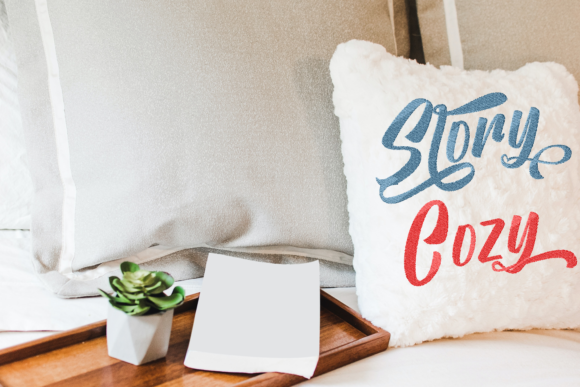
The visual personality of Story Cozy is rooted in nostalgia. It does not scream for attention; instead, it invites the viewer closer. The lines have a hand-drawn quality that avoids the rigid, robotic look of standard digitized fonts. For those of us creating design assets for boutique branding or handmade shops, this subtle imperfection is a feature, not a bug. It creates an immediate emotional connection, making it ideal for projects where comfort and tradition are key selling points. While it fits naturally into the Autumn category due to its warm, rustic vibe, its versatility allows it to transcend seasonal trends. It works just as well for a spring baby shower as it does for a holiday gift tag.
Real-World Application: The Tote Bag Test
To truly understand the value of an embroidery file, you must imagine it on a finished product. I recently considered Story Cozy for a custom order of canvas tote bags for a local bookstore. The goal was to create a handmade product that felt literary and timeless. Because the design relies on clean, open spacing rather than dense fill areas, it sat beautifully on the textured cotton canvas. There was no puckering, and the lettering remained legible even from a distance. This is crucial for Etsy sellers and small shop product creators who need their items to be recognizable in thumbnail images. The design’s clarity ensures that the finished product looks professional, enhancing customer trust and perceived value.
Versatility Across Product Lines
One of the strongest attributes of Story Cozy is its adaptability. I have tested similar vintage-style lettering on various substrates, and this design holds up well across several categories:
- Custom Apparel: It works exceptionally well for sweatshirt embroidery. Placed on the left chest or centered on the back, it adds a personalized touch without overwhelming the garment.
- Home Decor: For pillow covers or kitchen towels, the casual nature of the font complements the relaxed environment of a home. It feels intentional but not stiff.
- Baby Items: When scaled down appropriately, it makes for charming baby embroidery on onesies or blankets. However, care must be taken with scale to ensure readability.
- Accessories: It is suitable for embroidered patch creation, provided the hoop size is sufficient to maintain the integrity of the thinner strokes.
Technical Considerations for Stitching
While the aesthetic is forgiving, the technical execution requires attention. As a reviewer, I always advise checking the stitch density before hitting the start button. Designs with a vintage, hand-drawn look often utilize a mix of running stitch and light fill stitch patterns. If the density is too low, the fabric may show through, especially on dark materials. Conversely, if it is too high, you risk fabric distortion. Since Story Cozy is described as having an authentic look, it likely avoids heavy satin borders, which is beneficial for reducing bulk.
Stabilizer choice is critical here. For stretchy fabrics like jersey knits used in t-shirts, a cut-away stabilizer is non-negotiable to prevent the lettering from warping after washing. For woven fabrics like linen or cotton twill, a tear-away stabilizer usually suffices. Always test the design on scrap fabric first. This step saves time and material, ensuring that the thread colors you choose provide enough contrast against the fabric texture. I recommend testing in both black and white mockups to verify that the design stands out regardless of the background color.
Navigating Limitations and Challenges
No design is perfect for every scenario. Story Cozy, with its elegant and potentially finer details, requires careful handling in specific situations. If you are working with a small hoop size, ensure that the smallest elements of the lettering do not become lost. Tiny serifs or connecting lines can break or merge if the needle deflection is significant. Additionally, when embroidering on curved surfaces like caps, the perspective distortion can make straight lettering appear arched or uneven. In such cases, adjusting the design in your software to compensate for the curve is essential.
Another area of caution is highly textured fabrics. While the design looks great on canvas, extremely plush fabrics like fleece or thick terry cloth can swallow finer stitches. In these cases, consider using an applique technique or increasing the stitch count slightly to ensure visibility. Always review the specific file details provided by the creator. Since the description notes that the design comes with multiple formats, verify that you have the correct digital embroidery file for your machine brand to avoid conversion errors that might alter stitch paths.
Commercial Viability and Brand Consistency
For craft business owners and commercial embroidery professionals, consistency is key. Story Cozy offers a cohesive look that can help build brand recognition. Whether you are creating personalized gifts for weddings or branded merchandise for a cafe, the design’s timeless appeal ensures it won’t look dated in a year. This longevity is vital for maintaining a strong portfolio. Furthermore, using high-quality, well-digitized designs reduces the rate of re-stitches and customer complaints, directly impacting your bottom line.
Before selling any finished product featuring this design, confirm the licensing terms. Most designers allow commercial use for physical items, but restrictions may apply to digital resales or mass production. Understanding these boundaries protects your business and respects the creator’s intellectual property.
Final Verdict
Story Cozy is a reliable addition to any designer’s library. It bridges the gap between casual comfort and elegant sophistication. Its strength lies in its ability to enhance the narrative of a product without dominating it. For those creating holiday embroidery pieces, tote bag designs, or bespoke apparel, this design offers a professional finish that resonates with buyers seeking authenticity. By paying attention to stabilizer choice, fabric compatibility, and scale, you can leverage this embroidery project to create standout items that reflect both skill and taste. It is a design that invites storytelling, making it a valuable tool for anyone serious about the art of Embroidery.