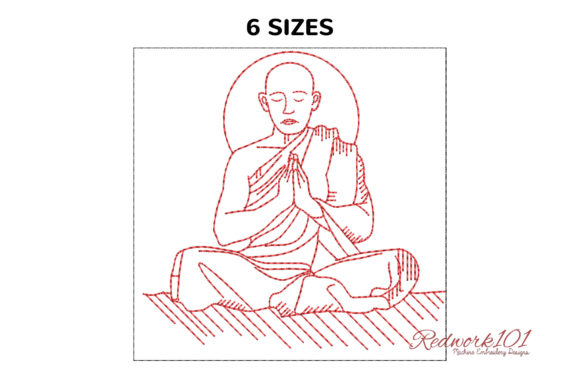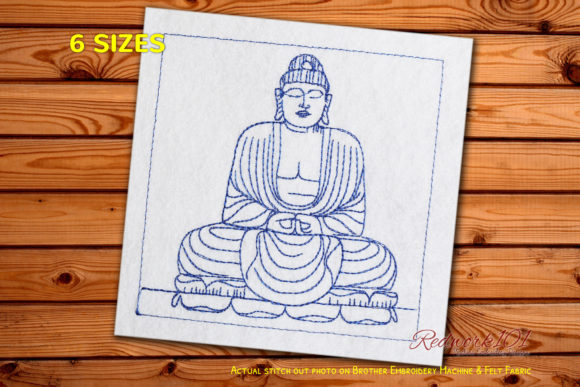
Reviewing Buddha Sitting in Lotus Pose for Merch
As an embroidery designer who has spent years digitizing artwork for small businesses, I approach every new machine embroidery design with a critical eye. It is not just about whether the image looks pretty on a screen; it is about how that design translates to fabric, how it holds up in the wash, and most importantly, how it serves the brand identity of the client. Today, I am reviewing Buddha Sitting in Lotus Pose, a piece that sits squarely in the Religion category but offers versatile applications for modern commercial embroidery.
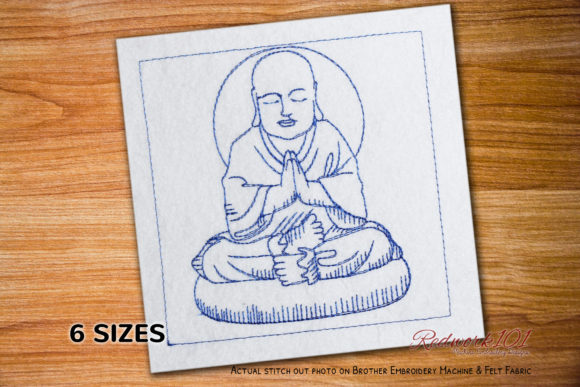
When I first loaded the file to inspect the stitch path, my immediate impression was one of serene professionalism. The design does not scream for attention with chaotic density or overly complex shading. Instead, it feels elegant and grounded. For boutique owners, yoga studios, or holistic wellness brands, this visual personality is crucial. It communicates calm and mindfulness without appearing cluttered. However, for a high-energy sports brand or a rugged industrial uniform, this might feel too delicate. Understanding where Buddha Sitting in Lotus Pose fits is the first step in leveraging it for your small business merch.
Visual Personality and Brand Alignment
The core strength of this design lies in its simplicity. In the world of branded patches and apparel, less is often more. The lotus pose is universally recognized, which aids in instant customer recognition. When evaluating this for brand identity, consider the message you want to send. Is your handmade product line focused on peace, balance, and spiritual well-being? If so, this design acts as a powerful visual anchor. It adds a layer of depth to your products, transforming a simple tote bag or cap into a statement piece that resonates with specific values.
I noticed that the description mentions an optional Box Stitch. This is a significant detail for customization. In most designs, the outer box is a different color unless it is part of the core artwork. This flexibility allows you to match the border to your specific thread colors or fabric background. For example, if you are creating custom apparel for a spa, you might choose a soft sage green border on a white towel. For a darker uniform, a contrasting gold or cream box can make the central figure pop. This adaptability is essential for maintaining visual consistency across different product lines.
Real-World Applications for Small Business Owners
Let us move beyond theory and look at practical use cases. I have tested similar designs on various substrates, and here is how Buddha Sitting in Lotus Pose performs in real business scenarios:
- Embroidered Patches: This is perhaps the strongest application. A patch allows for higher stitch density and cleaner edges. You can create iron-on or sew-on patches for customers to add to their own jackets or bags, creating an additional revenue stream for Etsy sellers.
- Apron Embroidery: For bakeries, florists, or craft studios, an apron with this motif adds a touch of artisanal charm. It suggests that the maker works with intention and care. Ensure you use a heavy-duty stabilizer to prevent puckering on cotton canvas.
- Cap Embroidery: Placing this on the front of a dad hat or baseball cap requires careful scaling. The curved surface of a cap can distort detailed designs. Since this design is relatively clean, it works well, but you must check the hoop size compatibility. A smaller hoop may require simplifying the outer box or removing it entirely.
- Tote Bag Design: Canvas tote bags are a staple for handmade brands. The design works beautifully as a chest-sized logo accent or a larger central graphic. The contrast between the thread and the natural fabric texture creates a premium, organic feel.
- Staff Uniforms: For wellness centers or yoga instructors, this can be embroidered on the chest of polo shirts or tunics. It serves as a subtle badge of expertise and alignment with the studio’s philosophy.
Technical Considerations and Production Notes
While the aesthetic is strong, technical execution is where many small business owners stumble. Before running a full production batch of this digital embroidery file, there are several critical steps you must take. First, always test the design in black and white. This removes the distraction of color and lets you see the actual stitch structure. If the details disappear in monochrome, they will likely get lost in low-light conditions or on busy fabrics.
Pay close attention to stitch density. High density can make the fabric stiff and cause puckering, especially on lighter materials like t-shirts or silk blends. Conversely, too low density might leave gaps where the fabric shows through, known as "grin-through." You must inspect spacing carefully. The description notes that the color of the outer box is different in most designs. Use this to your advantage by ensuring there is enough separation between the box and the central figure to prevent thread bridging.
Fabric texture plays a massive role in the finished product. On textured fabrics like terry cloth or heavy denim, fine details can get lost. In these cases, consider using a thicker thread or slightly enlarging the design. Always use the proper stabilizer. For stretchy fabrics, a cut-away stabilizer is non-negotiable to maintain shape after washing. For woven fabrics like tote bags, a tear-away might suffice, but testing is key.
Navigating Size and Surface Challenges
There are specific scenarios where you should use Buddha Sitting in Lotus Pose with caution. Small patch sizes, for instance, can blur intricate lines. If you are aiming for a tiny sleeve detail or a minimalist chest logo, ensure the design scales down without losing its recognizable form. Curved surfaces, such as the front of a cap or the shoulder of a shirt, can distort the symmetry of the lotus pose. Always create a printable mockup or stitch out a sample on the actual garment before committing to a large order.
Additionally, consider the washing requirements. Items that need frequent washing, such as staff uniforms or baby clothes, require secure stitching. Check if the design has adequate tie-offs and underlay stitches to prevent unraveling. Dark uniforms can be tricky because light threads may show lint, while dark threads on dark fabric may lack definition. Test thread color contrast rigorously to ensure the design remains visible and professional over time.
Enhancing Customer Trust and Value
Ultimately, the goal of using this design is to enhance your brand identity and build customer trust. A well-executed embroidery job signals quality and attention to detail. When a customer sees a crisp, clean Buddha Sitting in Lotus Pose on a product, they perceive higher value. It transforms a commodity into a curated item. For Etsy sellers and crafters, this distinction is vital in a crowded marketplace.
Before finalizing your decision, confirm commercial licensing. Not all digital embroidery files come with unlimited commercial rights. Read the terms carefully to ensure you can use this design for mass production or resale. Compare it beside your other design assets to ensure it complements your existing visual language. If your brand is modern and minimalist, this design fits perfectly. If your brand is chaotic and colorful, it might need adjustment.
In conclusion, Buddha Sitting in Lotus Pose is a versatile and meaningful addition to any embroidery library focused on wellness, spirituality, or artisanal crafts. By respecting the technical limitations of machine embroidery and understanding the psychological impact of the imagery, you can create merchandise that not only sells but also connects deeply with your audience. Remember to test, stabilize, and license correctly, and this design will serve your small business well.