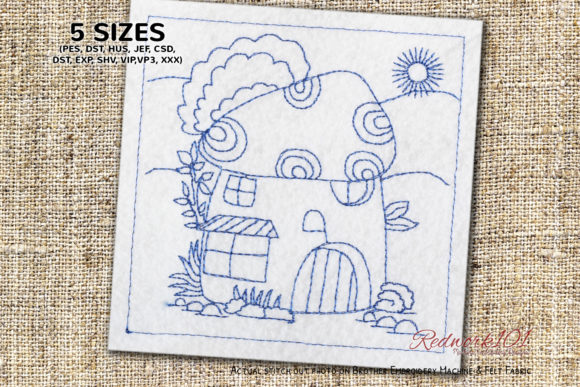
Review: Small Mushroom House Lineart Design
As an embroidery designer who has spent years digitizing files for boutique brands and local businesses, I approach every new machine embroidery design with a critical eye. It is not just about whether the art looks cute on a screen; it is about how that design translates into thread, how it holds up after fifty washes, and whether it elevates a brand’s perceived value. Today, I am reviewing the Small Mushroom House Lineart Design, a piece that promises to complete a fairy tale collection but requires careful consideration before being deployed in a commercial setting.
First Impressions and Visual Personality
The initial glance at this digital embroidery file reveals a whimsical aesthetic. The lineart style suggests a hand-drawn quality that appeals strongly to the current market trend favoring organic, rustic, and handmade vibes. For small business owners in the bakery, florist, or creative studio sectors, this visual language is potent. It feels friendly and approachable rather than corporate or sterile.
However, "lineart" in embroidery can be tricky. Unlike solid fill areas, line work relies heavily on consistent stitch width and tension. The description notes that the Box Stitch shown in promotional images is optional and that the outer box color varies. This variability means you must decide early on whether to include the border. From a branding perspective, consistency is key. If you choose to use the box, ensure it complements your primary logo colors. If you omit it, verify that the mushroom house stands alone clearly without looking unfinished.
Real-World Applications for Small Business Merch
Where does this design truly shine? I see significant potential for the Small Mushroom House Lineart Design in specific small business merch categories. It is ideal for creating a sense of community and warmth.
- Embroidered Patches: This is perhaps the strongest use case. A circular or custom-shaped patch featuring this house can serve as a collectible item for customers or a subtle badge for staff uniforms. Patches allow for higher stitch density control and can be applied to various garments, extending the life of the branded item.
- Tote Bag Design: Canvas totes are a staple for boutiques and markets. The rustic charm of a mushroom house pairs perfectly with natural cotton fabrics. Ensure you use a cut-away stabilizer to prevent puckering on the loose weave of canvas.
- Apron Embroidery: For bakeries and cafes, branded aprons are walking advertisements. Placing this design on the chest pocket area adds a touch of personality without overwhelming the professional look of the uniform.
- Cap Embroidery: While possible, this requires caution. The curved surface of a cap front can distort fine lines. If used here, simplify the design further or increase the stitch width slightly to maintain visibility.
Technical Considerations and Production Notes
Before you load this embroidery file into your machine for a large production run, there are several technical factors to address. The term "lineart" implies thin outlines. In embroidery, extremely thin lines can break easily or get lost in the fabric texture.
I recommend testing the design in black and white first. This strips away the distraction of color and allows you to judge the structural integrity of the stitches. Does the roofline connect smoothly to the base? Are there any jumps that might cause thread nests? Check the spacing between the mushroom spots and the house outline. If they are too close, they may merge during stitching, creating a blob rather than a defined shape.
Another critical factor is stitch density. Lineart designs often have lower density than satin-fill logos. On stretchy fabrics like jersey t-shirts, low-density designs can cause the fabric to pucker or shift. Always use an appropriate stabilizer. For knits, a soft cut-away is usually best. For woven materials like twill or denim, a tear-away might suffice, but test thoroughly.
The product description mentions that the color of the outer box differs in most designs. This indicates that the file may have multiple color stops or variations. You must confirm the thread colors you intend to use match your brand identity. Do not rely on the default thread chart in your software if it does not align with your brand guidelines. Create a printable mockup or a physical sample to approve the color contrast against your garment stock.
Brand Identity and Customer Trust
Using a cohesive set of design assets like this mushroom house helps build a recognizable brand identity. When customers see the same whimsical icon on your packaging, your social media, and your custom apparel, it reinforces trust. It signals that attention to detail extends to every touchpoint.
However, professionalism is paramount. A poorly executed embroidery job can damage that trust. If the threads are loose, the registration is off, or the design looks messy on a dark uniform, it reflects poorly on the business. The Small Mushroom House Lineart Design is decorative, but it must be executed with precision to maintain a premium feel. It should enhance the finished product, not distract from it.
Where to Use Caution
Not every application is suitable for this specific design. Avoid using it on items that undergo heavy industrial washing unless you have tested its durability extensively. Fine line work is more prone to abrasion damage than dense fills. Additionally, be cautious with very small sizes. If you shrink this design below two inches, the details of the mushroom house may become indistinguishable. Always check the recommended minimum size in the file documentation.
Also, consider the hoop size constraints. Ensure the design fits comfortably within your hoop with adequate margin for stabilization. Crowding the edge of the hoop can lead to hooping marks or distortion.
Final Verdict for Commercial Use
The Small Mushroom House Lineart Design is a charming addition to any fairy tale-themed or rustic brand portfolio. It offers versatility for patches, totes, and aprons, provided the technical execution is handled with care. It is not just a pretty picture; it is a tool for storytelling and brand building.
Before committing to a large order of commercial embroidery projects, take the time to stitch out samples on your actual garment blanks. Verify the license terms to ensure you have the right to use this digital embroidery file for resale or branded merchandise. Confirm the exact stitch count and format compatibility with your machine. By treating this design as a serious business asset rather than just decoration, you can leverage its whimsical appeal to drive engagement and sales for your small business.